


The Dark Side of the French Quarter
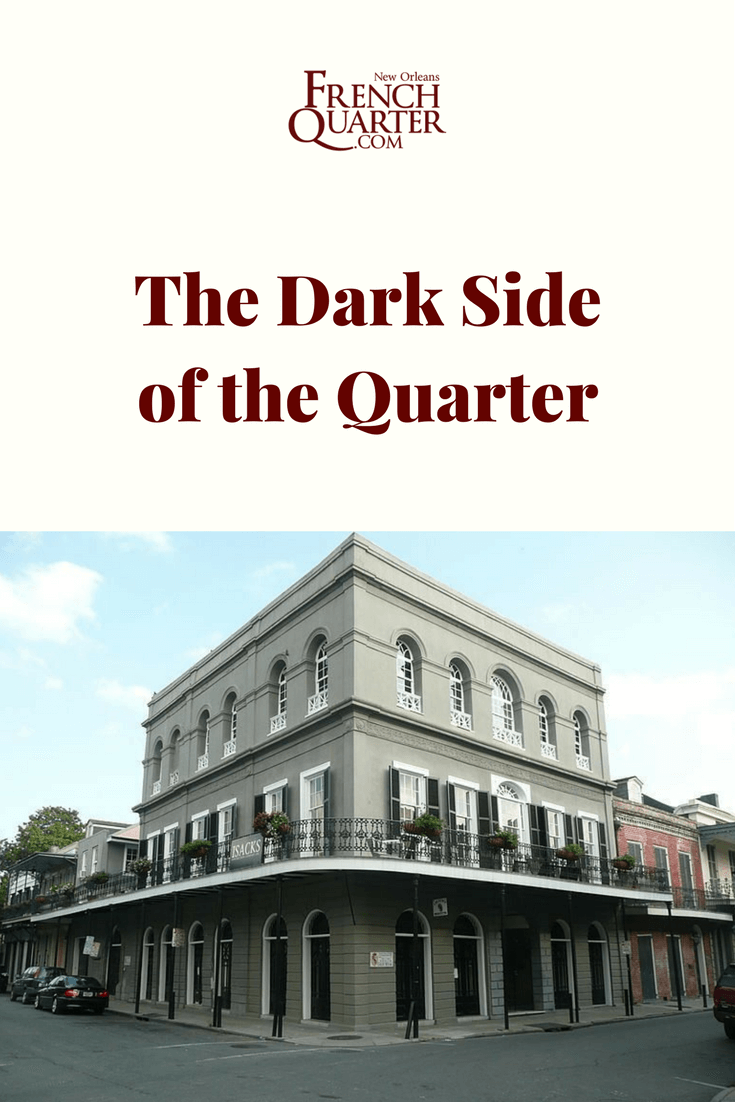
Throughout its history, the French Quarter has all but sounded a siren’s call to extreme personalities. Depending upon what drives them, they may lob off the heads of chickens and invoke mysterious spirits while chanting and dancing around a burning fire like Marie Laveau or brutally mutilate and torture those in their non-paid “employ,” like Delphine LaLaurie.
Add physical drama in the form of elaborate above ground tombs, secret passageways, courtyards, and imposing aged mansions — and you have the French Quarter’s Dark Side.
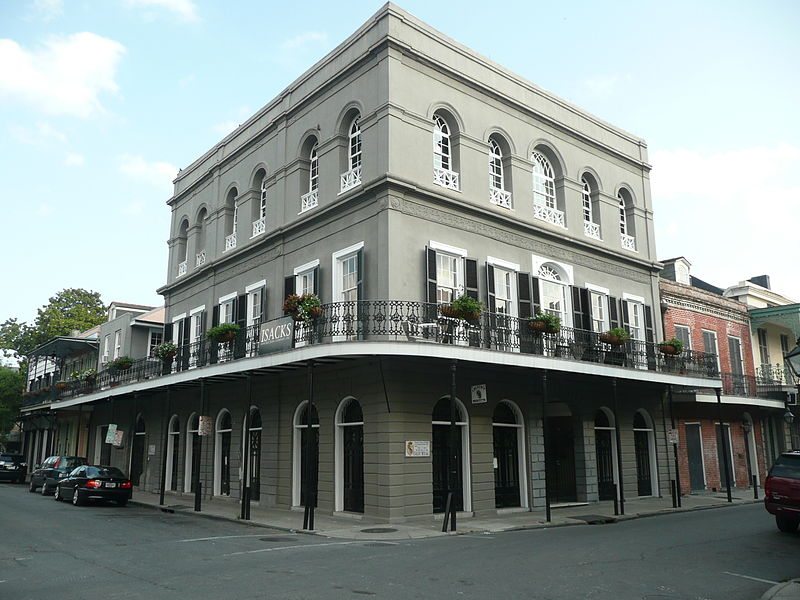
Photo courtesy by Reading Tom
Haunted French Quarter: LaLaurie Mansion
The story of Delphine LaLaurie and the heinous manner in which she tortured slaves is probably the most widely known of the French Quarter’s macabre tales.
Madame LaLaurie, a respected socialite, hosted many a grand event at her opulent home at 1140 Royal Street. Mistreatment of slaves was illegal and society began to shun LaLaurie after a neighbor witnessed the elegant woman chasing a young servant girl with a whip. The neighbor saw the girl leap to her death from the roof in her efforts to avoid LaLaurie. The neighbor summoned the authorities and that was the end of LaLaurie’s social career.
Upon her arrest, authorities removed the slaves from LaLaurie’s home. A short time later, a fire broke out in the kitchen. In their efforts to thwart the fire, neighbors and firefighters stumbled upon a grisly torture chamber in the attic. Nude slaves, most of them dead, were discovered. Some were chained to the walls, some were strapped to makeshift operating tables, and others were confined in cages made for animals. They had undergone various elaborate forms of torture and mutilation.
When news of the findings was published in the local newspaper, an angry mob drove LaLaurie and her family from the city.
Reports that the house is haunted have been rampant ever since. Many have claimed to hear screams of agony coming from the empty house. Others have seen apparitions of slaves walking about the property. There have even been reports of people claiming to have been attacked by an angry slave in chains.
Though the house has changed hands numerous times and has not served as only a private home, but also a musical conservatory, a school for young women and a saloon, among other things, many of the building’s owners have experienced some form of misery or another associated with the house.
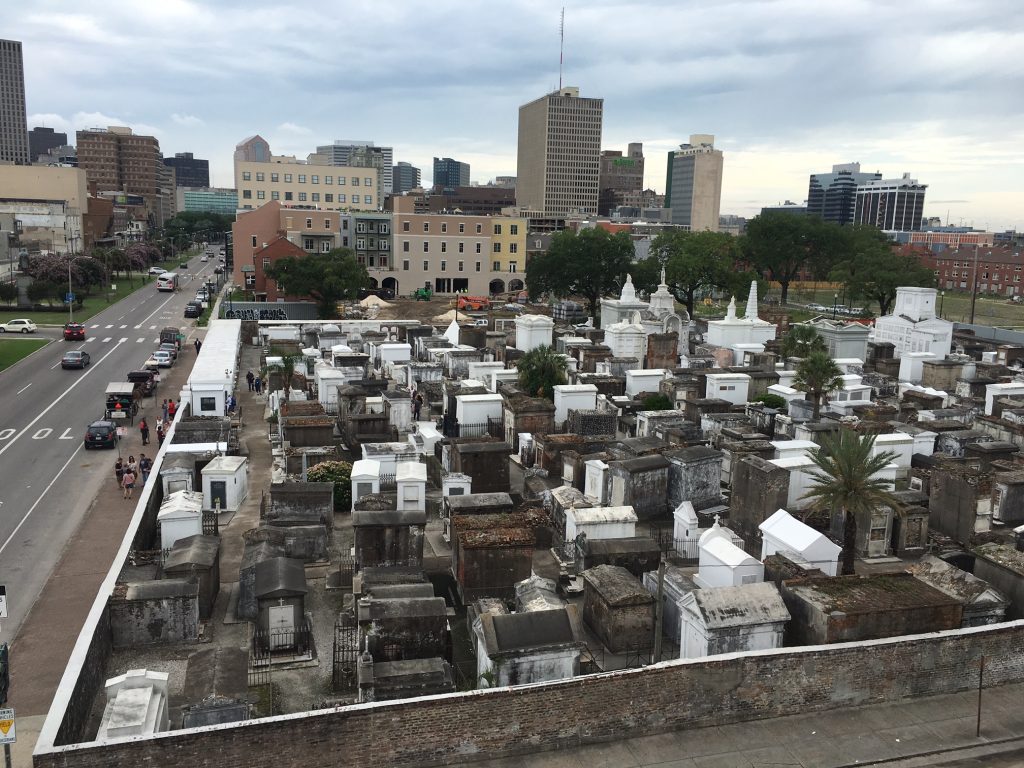
St. Louis Cemetery No. 1 and Marie Laveau
Both her life and her burial place have long evoked interest in Marie Laveau, New Orleans’ undisputed Queen of Voodoo, who is buried in St. Louis Cemetery No. 1, the city’s oldest burial ground.
The waterlogged, swampy soil upon which New Orleans is built makes digging more than a couple of feet impractical, especially if the reason for digging is a burial of anything more substantial than a hamster. This gruesome revelation was made soon after the city’s first cemetery was established on St. Peter Street, just inside the current French Quarter. Graves started popping to the surface and bodies floated down the street when it flooded — which was often.
The solution was to avoid burial altogether and house the dead in above-ground tombs. In the mid-1800s, the site of hundreds of little marble, granite or stone “houses” led to the coining of the term “cities of the dead.”
St. Louis Cemetery No. 1 was established by the Spanish in 1789. In addition to Laveau, many of the city’s first occupants and most notorious personalities are entombed here, including Etienne de Bore, father of the sugar industry, and Homer Plessy, of the Plessy v. Ferguson 1892 Supreme Court decision establishing separate but equal Jim Crow laws for African-Americans and whites in the South.
The tombs here are of whitewashed, stucco-covered red brick, and shine with an eerie brilliance in the gloom of evening as well as the midday sun.
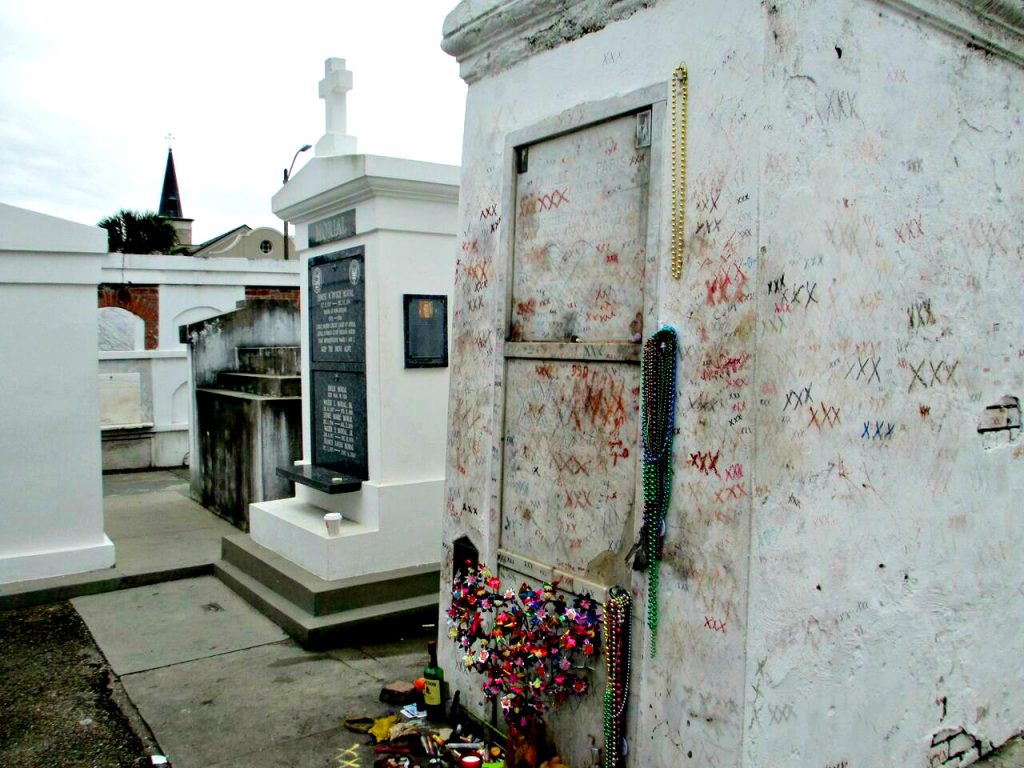
It’s easy to find Laveau’s tomb. Many small red Xs cover its surface, signs that visitors have made a wish in the hope of obtaining Laveau’s assistance. The faithful also leave behind offerings of coins, herbs, beans, bones, bags, flowers, and other tokens in hopes of invoking her goodwill.
Some believe Laveau materializes annually to lead the faithful in worship on St. John’s Eve. The ghost is always recognizable, they say, thanks to the knotted handkerchief she wears around her neck. A man once claimed to have been slapped by her while walking past her tomb. It is also said that Laveau’s former home at 1020 St. Ann Street is also among the French Quarter’s many haunted locales. Believers claim to have seen her spirit, accompanied by those of her followers, engaged in Voodoo ceremonies there.
Are you planning to spend some time in New Orleans soon? To stay close to all the action, book a historic boutique hotel in the French Quarter at FrenchQuarter.com/hotels today!