


Jewels By Definition
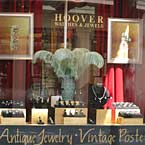
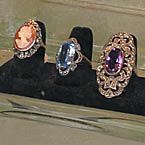
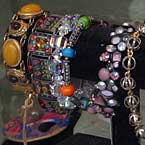
Retro-Vintage-Estate-Antique. By any name it’s dazzle to die for…
While the practice of wooing women with jewels may offend some gals, they probably aren’t from New Orleans. Throughout the ages Southern women have typically responded with great zeal to gemstone-laden offerings. This is a land where “Nothing exceeds like excess” has real meaning and many a starry-eyed debutante or social climber can not rest until she has secured a rock the size of an automotive headlight. Brazen mistresses and dilettantes collect their share of baubles and trinkets, too, enabling them to garb themselves up as peacocks with jewelry. Think “Elizabeth Taylor.” Repeat these behaviors for a couple of centuries and you have unearthed the primary source of New Orleans’ glut of fantastic second-hand family jewelry which takes the forms of antique, vintage and estate jewelry, most of the dealers of which are located in the French Quarter.
To clarify: There are no absolutes here but, with regard to jewelry, the term “antique” encompasses everything made prior to the 1920s, such as Georgian old mine-cut diamond jewelry, Edwardian filigreed platinum jewelry, Victorian gold jewelry and feminine, curvaceous Art Nouveau cuffs, rings, chokers and the like.
“Vintage” and “Retro” are more or less the same thing. The terms denote the period from the 1920’s to the 1950’s and include the Art Deco style, the lines of which were influenced by the introduction of cubism into the art world. Deco jewelry tended to be aesthetically geometrical and distinctive Asscher-cut diamonds and gemstones were popular. The angular lines of the Art Deco period later gave way to chunky rose gold rings, often set with European-cut diamonds, rubies, sapphires and emeralds.
Whisnant Galleries on Chartres Street has been selling “estate” jewelry 36 years.
“Estate Jewelry is jewelry that has been previously owned,” explained Tom Whisnant, a third generation principal with the gallery. The term is, again more or less, used to describe all fine jewelry hailing from the 1950’s to the present day. This genre includes modern brilliant-cut, emerald-cut and princess-cut gemstones and diamonds. It doesn’t have to be old to be “estate” – but it can be – but not too old. Loosely used “estate” could also encompass “antique,” “vintage,” and “retro.” It’s maddening. The wise buyer will request that the seller clearly differentiate amongst the terms.
“Just about anyone could sell ‘estate’ jewelry, though, without previous experience and knowledge of gems it could be a risk for the buyer,” Whisnant said. “Most reputable purveyors will have a certified gemologist on staff in order to properly ascertain quality and period of origin.”
Whisnant said much of his gallery’s jewelry is acquired from individual estates throughout the Gulf South region. Such is the case with a stunning retro (1940s) bracelet that caught the eye of an internationally recognized actress and continues to lure her back. “It’ is truly an unusual but wonderful piece,” Whisnant said. “It was crafted in the style of a large ring. The center stone is a 210.0-carat smoky topaz flanked by two 45.0-carat smoky topaz stones set in 18 karat gold.
“We recently found a similar piece in a book detailing Elizabeth Taylor’s jewelry collection.”
To think.
Jyl Benson is a New Orleans-based writer and publicist and frequent contributor to Time, New Orleans, St. Charles Avenue and the Times Picayune. She also regularly contributes to travel and guide books on New Orleans and the Gulf Coast.