

Diet Another Day: New Orleans Must Eats in the French Quarter
Amazing food is everywhere in New Orleans. From the Creole grand dames to the contemporary wonders helmed by the award-winning chefs, you can easily check a few famous renditions of the New Orleans and southern staples off your must-try food list — without leaving the French Quarter. Here are some suggestions to get you started.
Gumbo and Jambalaya
Gumbo is one of Louisiana’s most famous dishes, but there’s no single recipe to prepare it. In New Orleans, excellent gumbo is easy to find. The chefs tend not to deviate too much from the classic Cajun and Creole recipes, and even the beaten paths would often lead you to the best gumbo you’ll likely ever taste. The difference is whether you like your gumbo laden with meat or seafood; and with dark roux or a lighter roux. Most restaurants include at least two versions on the menu — the meat and the seafood.
Appropriately enough, the French Quarter restaurant that includes the dish in its name is a great place to try several of its varieties. Gumbo Shop (630 St. Peter St.) serves seafood and okra gumbo that is thick with shrimp and crabmeat, a smoky chicken and andouille sausage gumbo, and even gumbo z’herbes, a rarely-seen vegetarian gumbo made with greens. Cup-sized portions are available for easy sampling.
Staying true to the classic Creole cuisine since its inception in 1918, the fabled Arnaud’s Restaurant (813 Bienville St.) offers seafood gumbo on both its dinner and jazz brunch menus (and chicken and andouille gumbo on the jazz brunch menu).
Another beloved local institution, Galatoire’s (209 Bourbon St.), also serves two classic Creole gumbos. The seafood okra gumbo is made with shellfish stock and light roux, and is packed with Louisiana jumbo lump crabmeat and shrimp. The shredded duck and Andouille sausage gumbo is made with a dark roux and duck stock.
Gumbo Ya-Ya, a house specialty at Mr. B’s Bistro (201 Royal St.), is a Cajun country-style gumbo made with a dark roux, lots of Creole spices, chicken, and Andouille sausage. The seafood gumbo is a satisfying classic with shrimp, crabmeat and oysters.
Don’t be discouraged by the line at Acme Oyster House (724 Iberville St.): its classic menu of oysters, po-boys and gumbo is that good. Plus, you can get a cup of gumbo with half of po-boy, or as part of the New Orleans Medley, a hearty combo of gumbo, jambalaya, red beans and rice, and grilled smoked sausage. Go ahead and chase yours with an oyster shooter of vodka or an oyster-topped Bloody Mary.
Jambalaya is right up there with gumbo for international fame, but this flavorful rice-based dish is cooked more often at home than at restaurants. The one-pot local staple has absorbed French, Spanish, African, and Native American influences, and traditionally incorporates stock, meat, seafood, long-grain rice, and vegetables (like the “holy trinity” also used in gumbo — bell pepper, onion and celery). The main distinction is that the Creole version has tomatoes and the Cajun recipe doesn’t.
You can find one of the best versions of jambalaya at Coop’s Place (1109 Decatur St.), a local watering hole that serves excellent food until quite late at night. Coop’s rabbit and sausage jambalaya can be upgraded to “supreme” by adding shrimp and tasso, a spicy Cajun ham smoked on premises. Because Coop’s offers video poker, children under 18 are not allowed inside.
To sample jambalaya in a more upscale setting, try the version cooked up at the Pelican Club (312 Exchange Pl.), which uses the traditional ingredients of sausage, chicken and shrimp.
If you just want a taste, the spicy Creole jambalaya at Napoleon House (500 Chartres St.) comes with chicken and sausage and could be ordered as an appetizer or as a side. Consider pairing it with the restaurant’s famous muffuletta and washing it down with its signature drink, Pimm’s Cup.
Don’t Call It a Sandwich
A po-boy — the French-bread sandwich that is to New Orleans what the cheesesteak is to Philadelphia — comes in as many versions as there are ingredients to stuff inside a loaf. But one of the classic favorites is the fried oyster po-boy, which takes advantage of Louisiana’s abundance of bivalves and indigenous local skill in frying anything.
Johnny’s Po-Boys (511 St. Louis St.) has been dishing them out since 1950 and, in addition to a first-class sandwich, the popular lunch spot offers a glimpse of a truly down-home po-boy joint packed with character and characters. Ask for your po-boy “dressed,” and it comes with chopped lettuce, tomato, pickles, and plenty of mayonnaise.
If you want to depart from the traditional po-boy, pop into Killer PoBoys (219 Dauphine St.). They play around with the ingredients here — the black beer beef debris, served with pickled peppers and green beans, is to die for, while the roasted sweet potato sandwich with pecan spread is great for herbivores — and the results would make a purist’s mouth water.
Killer Poboys has another branch in the back of the excellent Erin Rose bar (811 Conti St.). Or venture to the very edge of the Quarter, into the orange bomb shelter that is The Orange Store (1700 N Rampart St.), also referred to as the Rampart Food Store. This neighborhood convenience store has all the atmosphere of the moon, but the fried shrimp po-boy is the stuff of culinary legend.
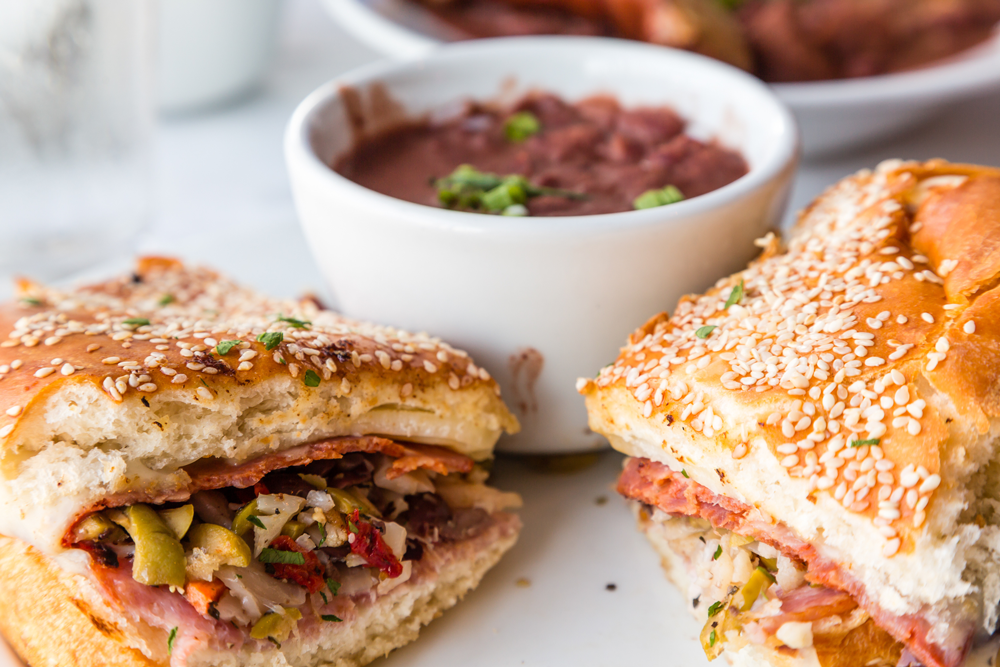
New Orleans’ other famous sandwich is the muffuletta (sometimes also spelled as “muffaletta”), the Italian answer to the po-boy: a round, seeded Italian loaf crammed full of cold cuts and cheeses and a big oily pile of the indispensable olive salad. The definitive version has been made since 1906 at Central Grocery & Deli (923 Decatur St.), where the only menu choices are a whole or a half muffuletta (half is plenty for most appetites). When the weather is nice, many people take their muffuletta and a Barq’s root beer to the nearby Riverfront or Jackson Square.
Like with most signature New Orleans creations, opinions run strong when it comes to any deviation from the tradition. Some maintain that muffuletta is a cold-cut sandwich, period. Yet Verti Marte (1201 Royal St.; 504-525-4767), for example, serves its Mighty Muffuletta cold AND hot (on the hot grilled Italian bread). Napoleon House also serves its traditional muffuletta warm. It’s one of the specialties, and is big enough for two people (you can also get it in half and quarter sizes).
And, just down the block from Central Grocery, Frank’s Restaurant (933 Decatur St.) has been winning fans for close to 60 years with its “World Famous Original Muffuletta” — which is baked and served with toasted bread and melted cheese.
Looking Forward to Mondays
Back in the old days, Monday was laundry day in New Orleans, and while the clothing was soaking so were the kidney beans for traditional red beans and rice. Laundry schedules may have changed, but a plate of red beans and rice with sausage is still the Monday special at diners and finer restaurants around town.
A delicious version is served every day at Buffa’s (1001 Esplanade Ave.), a New Orleans mainstay and a popular live-music spot. Like all good renditions of this classic dish, the red beans are cooked down to utter softness and seasoned for big flavor. And, like in many other local restaurants, you can get either a cup or a plate, and add meat (Buffa’s choice is smoked sausage).
Finales Fatales
You can usually tell when someone has visited Cafe Du Monde (800 Decatur St.) by the traces of powdered sugar that inevitably sprinkle their clothing. This means they’ve indulged in the bite-sized New Orleans tradition called beignets (pronounced “ben-yea’s”), square donuts covered liberally in powdered sugar and served piping hot. At Cafe Du Monde, a true New Orleans fixture in the French Market that closes only for Christmas and hurricanes, the automatic accompaniment to a plate of beignets is a strong cup of café au lait.
Most visitors to New Orleans have heard of Cafe Du Monde and its beignets, but don’t miss out on another dessert New Orleans is famous for — Bananas Foster. This decadent dessert remains a staple, impressively served flambéed tableside, or in many delicious variations (as a pie, ice cream, or French toast) in some of the best restaurants in the city.
If you want to try the classic version, Brennan’s Restaurant (417 Royal St.) is the place, since it was the restaurant’s Chef, Paul Blangé, who came up with it in 1951. Chef Blangé’s version remains the original go-to recipe and is made by sautéing the bananas in butter, sugar and cinnamon, then adding rum and igniting the concoction tableside, and served over ice cream. Arnaud’s is another notable version, with more cinnamon, and big enough to share.
With all the po-boys in this town, there’s bound to be some leftover French bread. Happily, this is the main ingredient in the Creole dessert called bread pudding. At the elegant and picturesque Court of Two Sisters (613 Royal St.), the bread pudding is served traditionally, spiked up with a hot whiskey sauce over the top, while the Palace Cafe (605 Canal St.) serves an excellent modern take on the dish with white chocolate baked inside. Either way, the dish makes a pleasing end to a rich dinner and an absolutely decadent finale to a courtyard brunch.
Are you planning to spend some time in New Orleans soon? To stay close to all the action, book a historic boutique hotel in the French Quarter at FrenchQuarter.com/hotels today!