

The Crescent City Coffee Connection: History and Heritage Imbues Each Cup
History seekers can find a handful of monuments and memorials to the Civil War around New Orleans’ parks, museums and public spaces, but to experience one enduring local legacy of the conflict you need only order a cup of coffee. That would be coffee with chicory, to be more precise.
The Union naval blockade of the port of New Orleans during the war led to a sudden scarcity of many commodities, including coffee. So just as the French did during the blockades of the Napoleonic wars, resourceful New Orleanians stretched their precious stock of imported coffee by mixing it with the ground, roasted chicory root, which they could grow locally. Though an invention of wartime necessity, the chicory blend was embraced for the mellow caramel undertones and smooth texture it added to coffee.
Today, coffee with chicory remains the most popular blend in a city where people do not take the matter lightly. Thanks to the gourmet coffee chains sprouting up across the national landscape, much of America is waking up to the idea that coffee can be a real pleasure. But coffee has always been serious business in New Orleans — whether stacked in pyramids of 100-pound sacks on the port docks or served in china in the city’s finest Creole restaurants.
By the 19th century, New Orleans was already one of the world’s busiest ports and, thanks to its proximity to Latin America, coffee was one of its leading imports. Naturally, coffeehouses sprang up around the city. In fact, one city directory from the 1850s lists more than 500 coffeehouses in the rapidly growing port town.
Today, one-third of all coffee imported to North America lands first in New Orleans, according to research from the economic development group Greater New Orleans, Inc. A dozen local coffee roasters prepare products for over 20 national and local brands, while Folgers now operates the world’s largest coffee roasting plant a few miles downriver from the French Quarter. The heady aroma of roasting coffee is a familiar scent in the mornings in many of New Orleans’ historic neighborhoods.
Creole Coffee and “French Doughnuts”
While the vitality of the local coffee industry may be gauged by the ton, true coffee culture in New Orleans is measured one cup at a time at the city’s historic and modern coffeehouses and restaurants.
The quintessential New Orleans coffee experience is offered around the clock at Cafe Du Monde (1039 Decatur St.). A fixture in the French Market since 1862, Cafe Du Monde has about as much in common with the modern type of coffeehouse as the French Quarter itself does with a suburban strip mall.
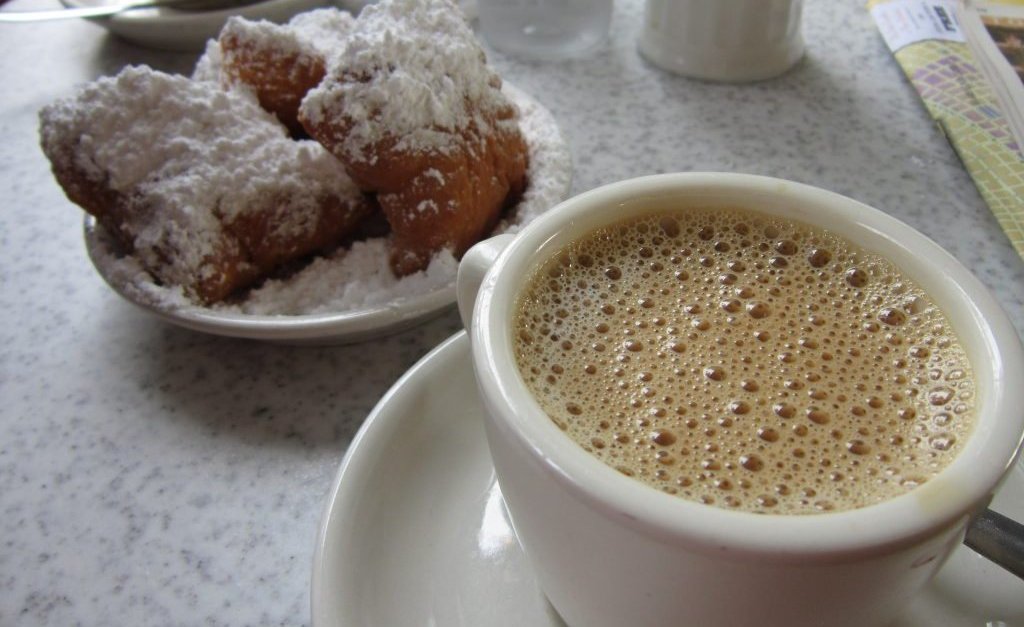
A crowd as varied as limo-hopping debutantes, drag queens in full regalia, and small-town church youth groups now regularly crowd the bustling, open-air coffee stand. Don’t look for fancy espresso concoctions here; the standard order is café au lait (equal portions of coffee with chicory and steamed milk) and beignets, the fried squares of dough often called French doughnuts. The landmark coffee stand closes only for Christmas or when the occasional hurricane looks particularly menacing.
Cafe Du Monde once dueled for coffee supremacy in the French Market with the Morning Call Coffee Stand. Founded in 1871, it offered an almost identical menu of café au lait and beignets right around the corner from Café du Monde. However, the Morning Call has been serving more recent generations from its location at 5101 Canal Street (where New Orleans meets Lakeview; and it’s also the end of the line for a few bus routes and the Canal streetcar line).
While tradition is revered in the Crescent City, time hasn’t stood still for other incarnations of the New Orleans coffeehouse, and the French Quarter offers many different takes on the experience. The French Quarter outpost of CC’s Coffee House (941 Royal St.), for instance, combines the heritage of this long-time Louisiana coffee roaster with all the menu options and design elements of the much larger gourmet coffee chains.
Coffeehouses in the French Quarter are numerous and as varied as the people you see on the always colorful streets. From the polished brass and woodwork of the sunny Cafe Envie (1241 Decatur St.) to the charming, old-world Croissant D’Or Patisserie (617 Ursulines St.), these coffeehouses are united by New Orleans’ universal demand for quality coffee and the rich heritage that accompanies the brew here.
Are you planning to spend some time in New Orleans soon? To stay close to all the action, book a historic boutique hotel in the French Quarter at FrenchQuarter.com/hotels today!